- 2 Roanoak Court, East Bendigo VIC 3550
- +61 421 445 608
- sales@bendigobuildingtimber.com.au

The right fibre cement cladding depends on four things: the look you want, your site’s exposure and bushfire risk, how the boards will be installed, and what finish you plan to apply. For most Australian homes, the choice comes down to the board profile (weatherboard, wide plank or grooved panel) and whether the wall system around it is detailed correctly. This guide explains the main options and trade-offs, and how to avoid costly mistakes.

Fibre cement cladding is an external wall covering made from cement, sand and cellulose fibres, mixed with water and cured under pressure or heat into boards or sheets. Modern boards are asbestos-free. Asbestos-containing cement sheeting was used in many Australian homes built before the mid-1980s, so never cut, drill or sand old sheeting without professional advice.

Fibre cement cladding comes in several profile families. Product names and dimensions vary between manufacturers, so check the exact specification before ordering.
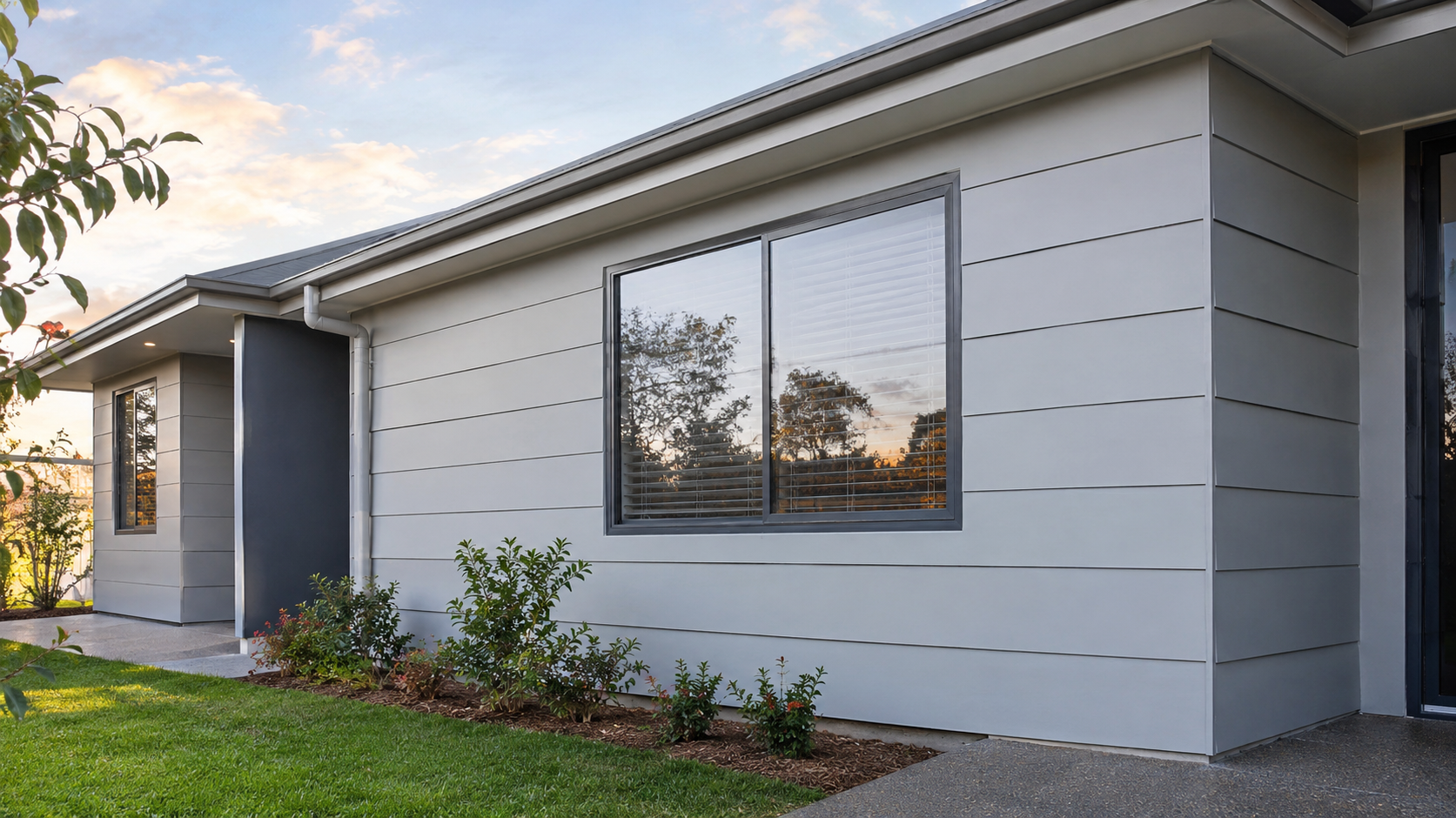
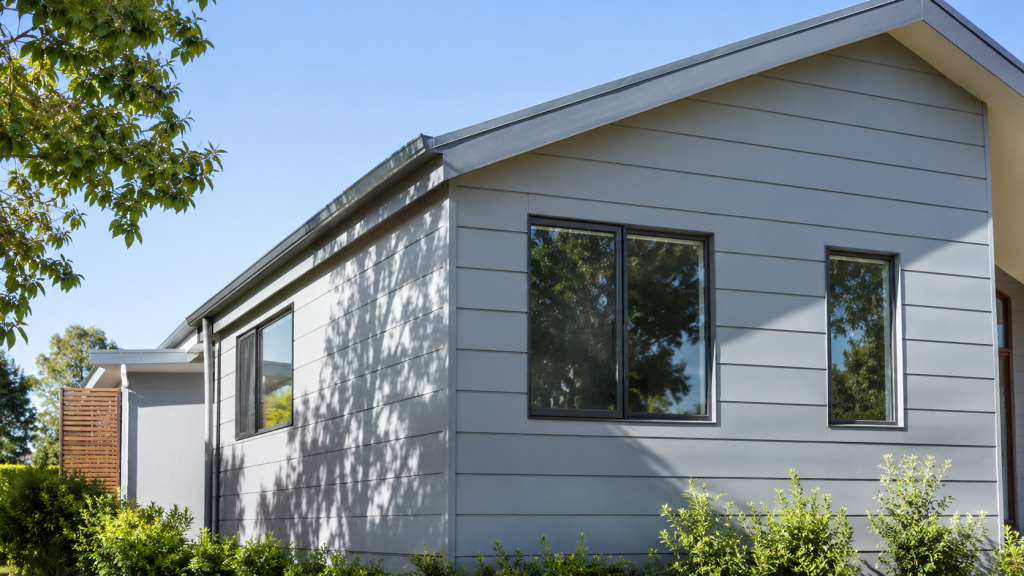
Weatherboard-style boards overlap horizontally and recreate the classic Australian profile. They suit traditional, Federation, coastal and renovation projects where the home should keep a familiar character. The overlap casts small shadow lines, and the boards are generally straightforward for builders to install.
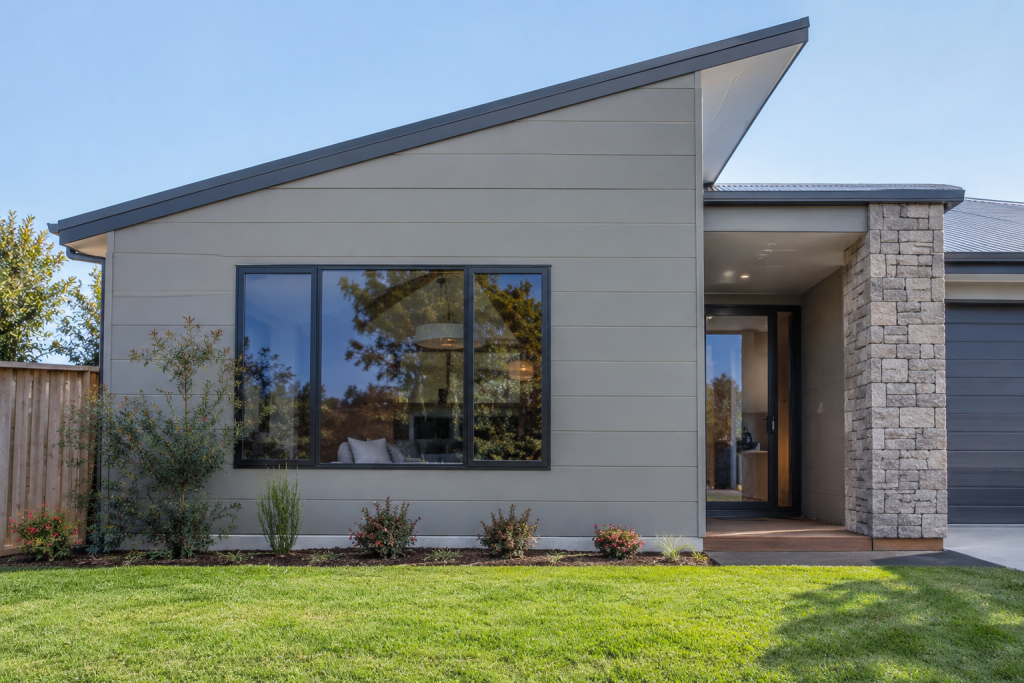
Wide-plank boards are broader than standard weatherboards, so fewer horizontal lines appear across the wall. The result is a calmer, more contemporary look. Fewer joins can also mean quicker coverage, but the larger boards need careful handling and accurate setting out.
Grooved panels are large sheets with routed grooves or flat faces and a fine surface texture. They suit modern, minimalist designs and can be laid vertically or horizontally. Groove spacing, joint treatment and sealing are critical, because the clean lines show every flaw in finishing.
Deep-profile boards are thicker and create strong shadow lines with a substantial, traditional look. They suit homes that want a pronounced timber-style appearance without timber’s maintenance demands.

Profile | Look | Best suited to | Key consideration |
Weatherboard-style | Traditional horizontal lines | Period and renovation projects | Many joins to seal and paint |
Wide-plank | Fewer, broader lines | Contemporary homes | Heavier boards, careful handling |
Grooved panel | Smooth, modern surface | Minimalist designs | Joint finishing is critical |
Deep-profile board | Strong shadow lines | Homes wanting a timber-style look | Thicker boards, more trim detailing |
Weatherboard-style boards deliver a familiar, fine-lined appearance, while wide-plank boards give a cleaner, more modern face. Choose weatherboard where heritage character matters. Choose wide plank for a streamlined look with fewer horizontal breaks.
Grooved panels give a flat, contemporary face, whereas deep-profile boards add depth and shadow. Grooved panels favour modern architecture, and deep-profile boards favour homes that want a more traditional presence. Panel systems depend heavily on tidy joints, so installer experience matters more.
Horizontal-groove panels imitate the rhythm of weatherboards using a flat sheet, which gives crisp lines without overlaps. Weatherboard-style boards produce real shadow lines from their overlap. Groove panels suit sleek facades, and true weatherboard profiles suit traditional streetscapes.
Fibre cement cladding costs vary widely, so there is no single reliable figure. Total installed cost depends on the profile, board thickness, wall area, wall shape, number of storeys, access, trims and flashings, paint system, and labour rates. Panel and wide-plank systems may need less labour per square metre than detailed weatherboard work, but specification and finishing quality often matter more than the board price. Removing old cladding also adds cost. Get itemised, written quotes from several licensed builders or installers, with the same inclusions, so the figures are comparable.
Fibre cement cladding is a strong choice for homeowners who want a durable, versatile, low-maintenance exterior that suits Australian conditions. It works best when the profile suits the home, the wall system is detailed properly and a skilled installer does the work. If you are weighing up alternative materials, the guide to WPC cladding for homes and buildings is a useful next read. If you are comparing options in Bendigo, Bendigo Building and Timber Supplies can help you talk through your project and options.
Ans:- Yes. Fibre cement cladding is widely used across Australia because it handles heat, UV, moisture and pests well. Suitability still depends on your bushfire rating, exposure and correct installation, so check local requirements and manufacturer instructions.
Ans:- Lifespan depends on installation quality, finish, exposure and maintenance. The boards themselves are durable, but paint, sealants and flashings need periodic attention. Review the manufacturer’s stated warranty terms and conditions for specifics.
Ans:- Fibre cement cladding is water-resistant, not a complete waterproofing system. The wall’s weather protection relies on correct flashings, sealed joints, wall wrap and paint. Poor detailing is a common cause of moisture problems.
Ans:- Popularity varies by region and architectural trend. Weatherboard-style profiles remain a familiar favourite, while wide-plank and grooved panel looks are common on contemporary homes. The best style is the one that suits your home’s design and site conditions.