- 2 Roanoak Court, East Bendigo VIC 3550
- +61 421 445 608
- sales@bendigobuildingtimber.com.au

WPC cladding is a composite wall covering made from wood fibres or wood flour combined with polymers and other additives. It is commonly selected for projects that want a timber-inspired appearance with lower routine maintenance than many traditional exterior timber finishes.
For Australian homes and buildings, choosing the right cladding involves more than appearance. Exposure to sunlight, moisture, temperature changes, installation details, fire requirements, ventilation and the building’s overall wall system can all affect suitability and performance.

WPC wall cladding is made from a combination of wood-based material and polymer. The result is a manufactured cladding product designed to provide a consistent decorative finish while offering properties associated with composite materials.
Depending on the product, WPC boards or panels can replicate timber grain, colour and texture. They are used for feature walls, facades, outdoor living areas and other architectural applications.
A key distinction is that WPC cladding is generally a non-structural finish. It forms part of the external wall system rather than replacing the structural framing or the weatherproofing function of the entire wall.
This means the product should be assessed as part of the complete wall assembly, not as an isolated waterproof barrier.

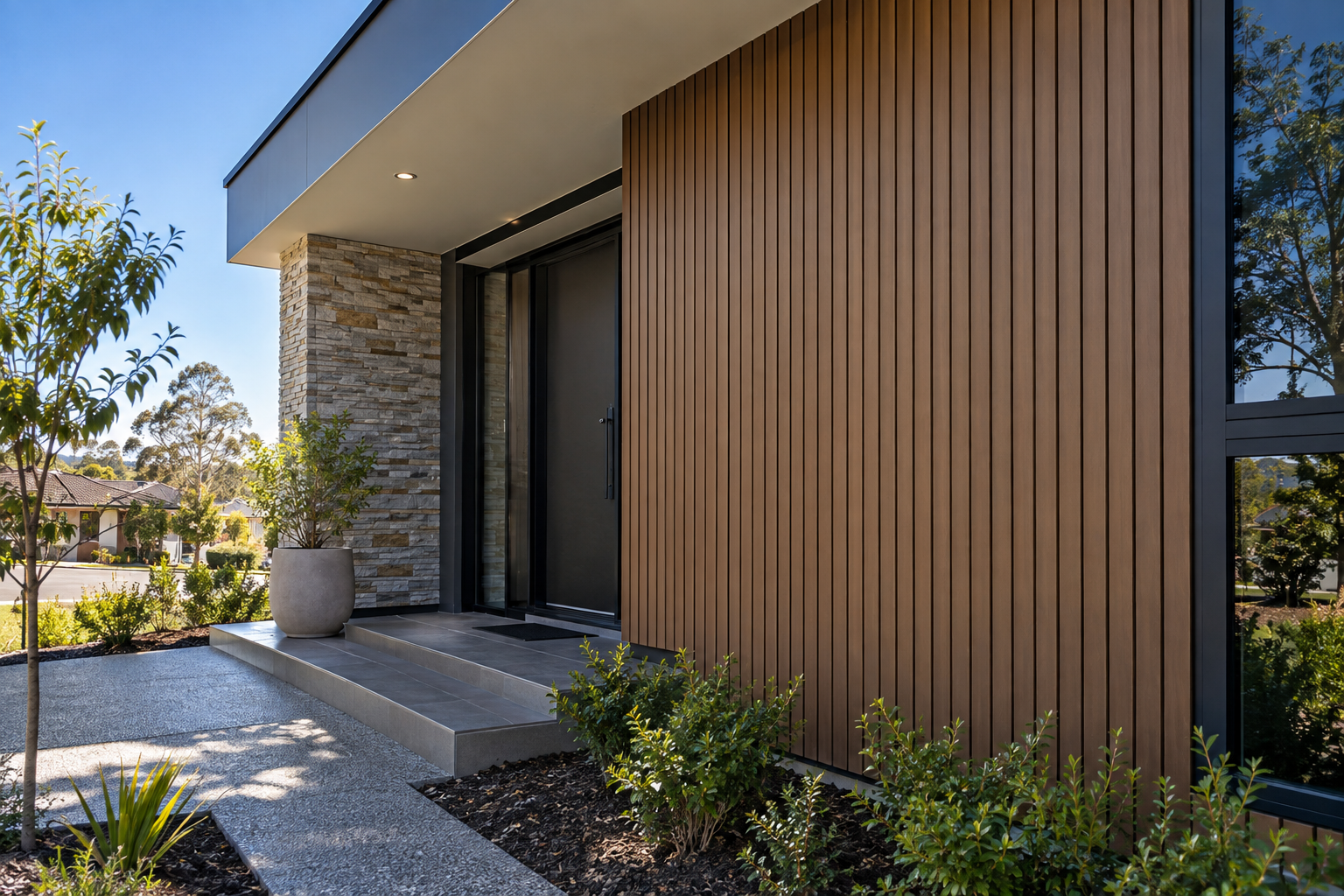
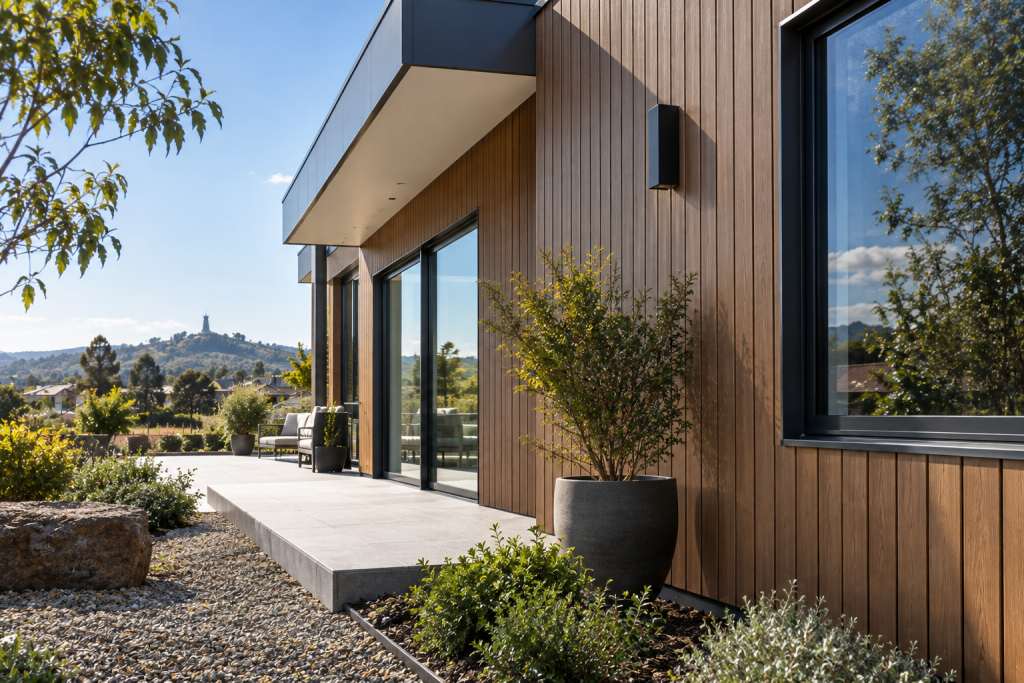
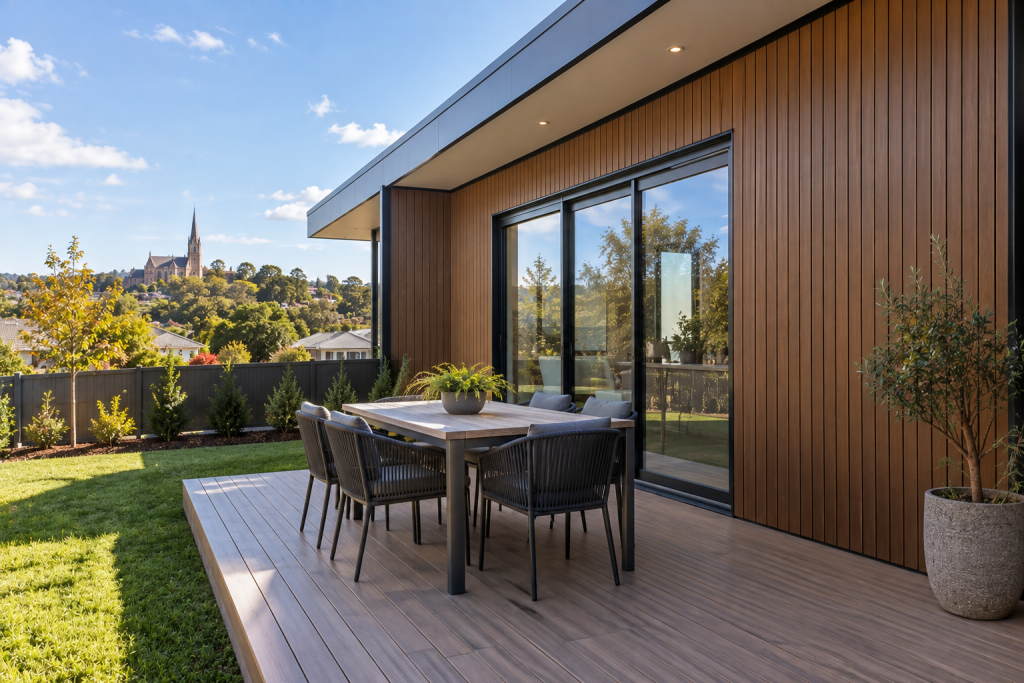
WPC exterior wall cladding can be used in a range of residential and commercial applications where the product’s technical specifications and installation requirements are appropriate.
Common applications include:
WPC external cladding can be particularly useful when a project requires a contemporary timber-look appearance without the ongoing coating requirements associated with some natural timber finishes.
However, suitability depends on the specific WPC product. Installation instructions, fixing systems, allowable applications and environmental limitations should always be checked before specifying a product.

The main attraction of WPC outdoor cladding is the combination of timber-inspired aesthetics and composite-material characteristics.
WPC products can reproduce the visual character of timber while providing a more consistent manufactured finish. This makes exterior WPC wall cladding useful for modern homes where designers want warmth and texture without relying entirely on natural timber.
Many WPC products are designed to require less routine maintenance than exposed timber. Depending on the product, this can mean avoiding regular painting, staining or oiling.
That does not mean WPC cladding is maintenance-free. Dirt, dust, organic growth and surface contamination can still accumulate, particularly in exposed outdoor environments.
Many composite cladding products are designed to resist moisture-related deterioration better than untreated timber. Some products also incorporate capped or engineered surfaces that provide additional protection.
However, calling every product “waterproof” would be misleading. Waterproof WPC wall cladding is only an appropriate description when the specific product has been tested and designed for that performance. The complete wall assembly still needs appropriate drainage and weatherproofing.
Unlike natural timber, manufactured WPC products can provide relatively consistent profiles, dimensions and finishes. This can be useful where a project requires a uniform architectural appearance.
WPC wall panels and boards can be available in different colours, profiles and textures. Timber-look finishes can suit contemporary, minimalist and more traditional architectural styles.
It can be, but suitability should be assessed according to the specific product and site.
Australian buildings can experience strong UV exposure, temperature fluctuations, heavy rainfall, wind-driven moisture and, in some locations, bushfire-related requirements. These conditions make product selection and installation particularly important.
For a Bendigo project, consider:
The National Construction Code requires external walls to meet weatherproofing requirements, including preventing water penetration that could cause dampness or deterioration of building elements.
For this reason, WPC cladding exterior installations should follow the manufacturer’s approved system rather than relying on appearance alone.
Both materials can create an attractive exterior, but they involve different maintenance and material characteristics.
Consideration | WPC cladding | Timber cladding |
Appearance | Consistent timber-inspired finishes | Natural grain and variation |
Maintenance | Generally lower routine maintenance | May require coatings and periodic maintenance |
Moisture performance | Depends on product formulation and installation | Depends heavily on timber species, detailing and finish |
Design | Manufactured colours and profiles | Natural species and finishes |
Repairs | Damaged boards may require replacement | Some timber damage can potentially be repaired or refinished |
Material character | Manufactured composite | Natural material |
Both materials can create an attractive exterior, but they involve different maintenance and material characteristics.The choice should therefore be based on the project’s priorities rather than assuming one material is universally better.
For projects where natural timber character is the primary design objective, timber may be preferable. Where consistent appearance and reduced routine coating requirements are priorities, WPC may be worth considering.
Installation quality is critical because cladding is part of a larger building envelope.
Before purchasing or installing WPC wall cladding exterior, check the product documentation for:
Fire performance deserves particular attention. NCC requirements can vary according to building classification and construction type, and some external wall systems must meet specific fire-performance or non-combustibility provisions.
The NCC also recognises that compliance may depend on the complete external wall system and supporting evidence, rather than simply the name of an individual cladding material.
The best product depends on the building, exposure conditions, appearance and installation requirements.
Before choosing WPC cladding for exterior walls, ask:
These questions can prevent a common mistake: choosing cladding based almost entirely on colour and appearance, then discovering later that the installation system or building requirements are unsuitable.
For projects in Bendigo, product selection should also account for the specific exposure of the site rather than assuming that every exterior wall experiences the same conditions.
Choosing WPC outdoor wall cladding is about more than selecting a timber-look finish. The right solution needs to suit the building, exposure conditions, installation method, maintenance expectations and applicable Australian building requirements. Comparing profiles, finishes and technical specifications before installation can help ensure the cladding is appropriate for the intended application.
For homeowners, builders and designers in Bendigo, Bendigo Building and Timber Supplies provides a local option for exploring WPC cladding products. Browse the WPC Cladding range, then take a look at these top exterior cladding trends for 2026 to explore current design approaches before confirming product suitability, installation requirements, accessories and availability.
Ans:- WPC cladding can be suitable for exterior walls when the specific product is designed and approved for external use and installed according to its requirements. The complete wall system must also satisfy applicable building requirements.
Ans:- Not every WPC product should be described as waterproof. Composite materials can provide moisture resistance, but weatherproofing depends on the product, joints, fixings, wall construction, drainage and installation details.
Ans:- WPC generally requires less routine coating maintenance than many exterior timber finishes, but it still needs appropriate cleaning and inspection. Follow the manufacturer’s maintenance instructions for the particular product.
Ans:- Neither material is universally better. WPC can suit projects prioritising consistent appearance and lower routine maintenance, while natural timber can suit projects where authentic grain, texture and natural material character are more important.
Ans:- Some WPC systems can be used for commercial applications, but suitability depends on the specific product, building classification, installation system and applicable NCC requirements. Fire performance and weatherproofing should be verified before specification.