Please contact us to confirm product availability before placing an online order or making any payments. This helps prevent delays and ensures a smooth ordering process. | Due to the ongoing oil crisis, there has been an increase in the delivery charges.

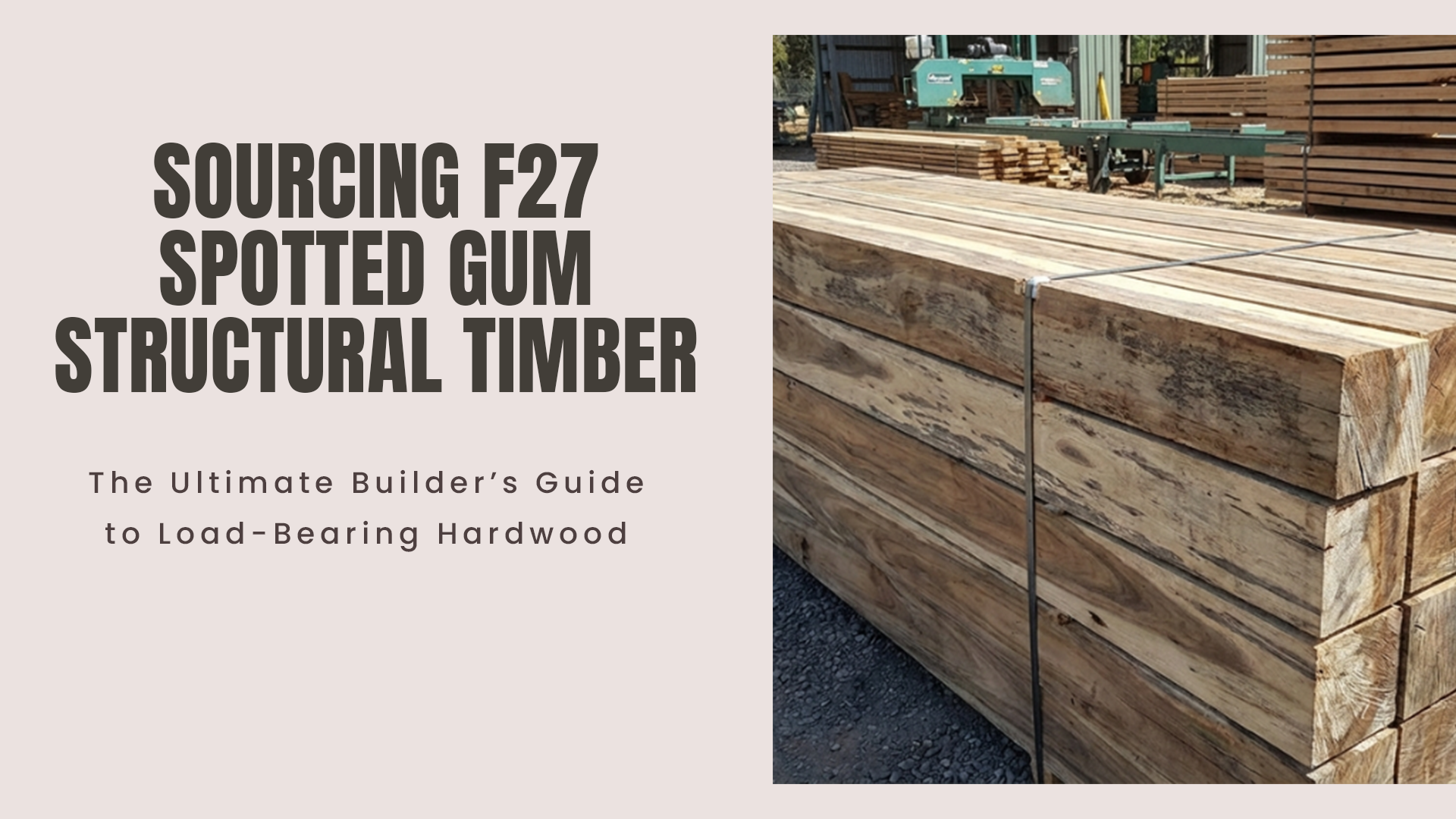
Sourcing F27 Spotted Gum Structural Timber: The Ultimate Builder’s Guide to Load-Bearing Hardwood

Sourcing F27 Spotted Gum

When structural performance matters, choosing the right timber is just as important as choosing the right design. Spotted gum structural timber is one of Australia’s most trusted hardwoods for demanding construction projects, offering exceptional strength, durability, and long-term reliability.

Among the available strength grades, F27 structural timber is widely specified for projects that require high load-bearing capacity without compromising the natural appearance of hardwood. Whether you’re building a residential home, commercial development, pergola, bridge, or outdoor structure, understanding how to source quality structural hardwood timber can save time, reduce waste, and help ensure compliance with Australian Standards.

This guide explains what F27 Spotted Gum is, where it is commonly used, what to look for when purchasing it, and how to choose a reliable supplier.

What Is F27 Spotted Gum?

F27 Spotted Gum in Bendigo

F27 spotted gum is a visually stress-graded Australian hardwood that achieves an F27 structural strength rating under Australian grading requirements, including AS 2082 for hardwood grading. The “F27” designation refers to its characteristic bending strength, making it suitable for structural applications where high strength is essential.

Spotted Gum itself is not a single species but a group of native Australian hardwoods valued for their:

  • High strength-to-weight ratio
  • Excellent durability
  • Attractive natural grain
  • Resistance to wear
  • Suitable for indoor and outdoor structural applications when appropriately detailed

Because of these properties, it is commonly specified for engineered structural designs throughout Australia.

Why Builders Choose F27 Structural Timber

The biggest advantage of F27 structural timber is its ability to carry substantial structural loads while maintaining the visual appeal of natural hardwood.

Common benefits include:

  • Excellent structural performance
  • High resistance to impact and wear
  • Suitable for long spans in many engineered applications
  • Attractive appearance for exposed timber construction
  • Naturally durable Australian hardwood
  • Available in various beam, post and bearer sizes

Compared with many softwoods, F27 hardwood often allows designers to achieve high structural performance with exposed timber finishes that do not require additional cladding.

Common Applications for F27 Spotted Gum

F27 Spotted Gum is used across both residential and commercial construction.

Typical applications include the following:

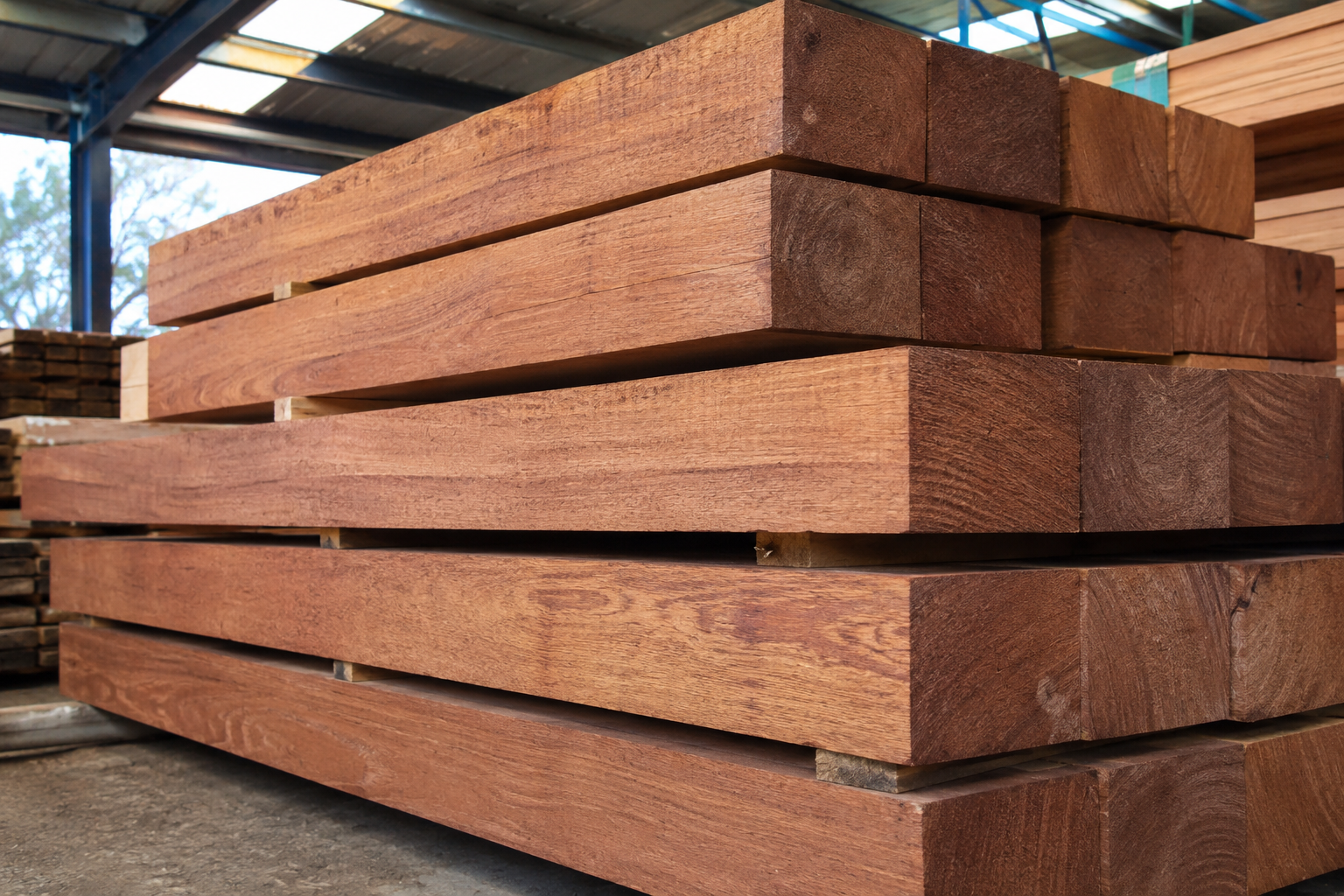
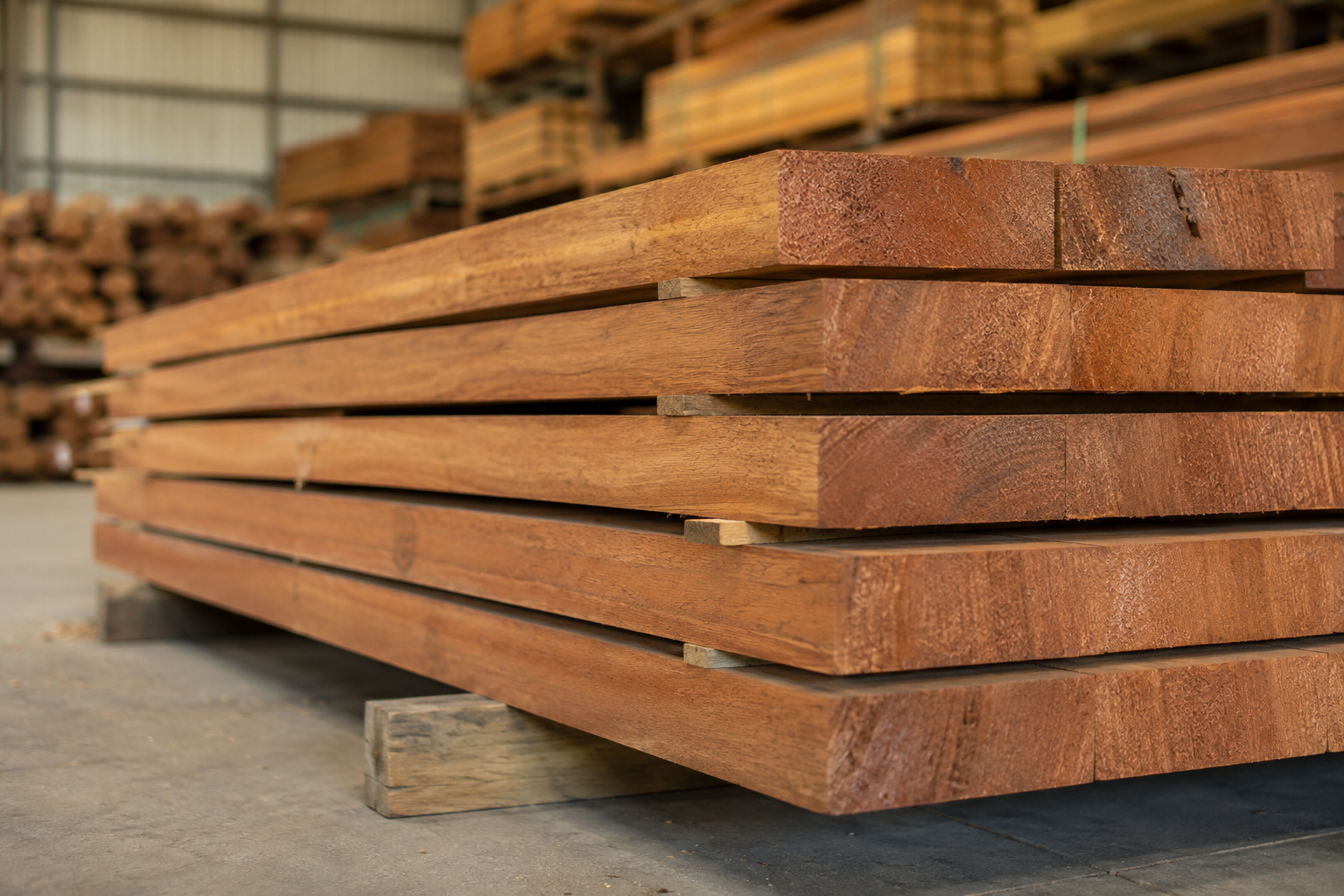
  • F27 spotted gum beams
  • F27 spotted gum posts
  • Timber lintels
  • Timber bearers
  • Verandahs
  • Deck structures
  • Pergolas
  • Carports
  • Exposed roof framing
  • Heavy-duty structural framing
  • Commercial buildings
  • Public infrastructure
  • Outdoor construction projects

Its combination of durability and strength makes it particularly attractive for projects where structural timber remains visible after construction.

Seasoned vs Kiln-Dried Spotted Gum

Builders often compare seasoned spotted gum with kiln-dried spotted gum when selecting structural materials.

Feature

Seasoned Spotted Gum

Kiln-Dried Spotted Gum

Moisture content

Reduced through-air seasoning

Controlled drying in a kiln

Dimensional stability

Good

Typically improved

Availability

Common

Common for structural applications

Machining

Good

Often easier and more consistent

Suitable for internal framing

Yes

Yes

Both options can be suitable depending on the project specification. Always confirm the required moisture content with your engineer, designer or building documentation.

Understanding Structural Timber Grades

Not all hardwood structural products perform the same.

Structural timber grades indicate how timber has been assessed for strength and stiffness. For hardwoods, visual grading is commonly performed under AS 2082, with grading carried out by qualified personnel.

Higher grades generally provide:

  • Greater load capacity
  • Increased design flexibility
  • Better suitability for longer spans
  • Compliance with engineering specifications

Always ensure structural timber is correctly graded and supplied with appropriate documentation where required.

F27 Spotted Gum vs LVL

One common question is whether natural hardwood or engineered timber is the better option.

Feature

F27 Spotted Gum

LVL

Material

Natural Australian hardwood

Engineered timber product

Appearance

Premium natural timber

Manufactured finish

Strength

High structural performance

High structural performance

Exposed applications

Excellent

Often concealed

Durability

Naturally durable species

Depends on product specification

For exposed architectural structures where appearance matters, many builders prefer natural hardwood. For concealed framing or engineered span requirements, LVL may be selected depending on engineering design.

The right choice depends on structural requirements, aesthetics, budget and project specifications.

What to Look for When Buying Structural Hardwood Timber

Not every supplier stocks the same quality or range.

Before purchasing, consider:

1. Confirm the structural grade

Ensure the timber is genuinely F27 graded where specified.

2. Ask about moisture content

Check whether you’re purchasing seasoned or kiln-dried material.

3. Verify dimensions

Structural beams, bearers and posts are supplied in many sizes. Confirm availability before finalising project schedules.

4. Inspect timber quality

Look for:

  • Straightness
  • Consistent grading marks
  • Minimal handling damage
  • Appropriate storage conditions

5. Check supply capability

Reliable structural timber suppliers should be able to source both standard and larger structural sections for commercial and residential projects.

Choosing the Right Structural Timber Supplier

Finding a dependable F27 structural hardwood supplier involves more than comparing prices.

A quality supplier should offer:

  • Consistent product availability
  • Knowledge of structural hardwood products
  • Assistance in interpreting engineering specifications
  • Reliable delivery scheduling
  • Accurate product information
  • Access to various hardwood structural beams and posts

For projects across Victoria, working with experienced structural hardwood suppliers in Victoria can help reduce procurement delays and minimise costly substitutions.

Best Practices for Working with F27 Hardwood

Proper handling helps preserve timber quality before installation.

Follow these practical recommendations:

  1. Store timber off the ground on level supports.
  2. Protect material from prolonged weather exposure before installation.
  3. Follow engineering drawings for all structural connections.
  4. Use compatible fixings suited to hardwood applications.
  5. Avoid unnecessary machining after structural grading unless approved for the project.

These simple steps help maintain both structural performance and appearance.

Common Mistakes to Avoid

Builders occasionally encounter avoidable issues when sourcing structural hardwood.

Common mistakes include:

  • Ordering before the engineering drawings are complete
  • Assuming every Spotted Gum product is F27 graded
  • Selecting appearance-grade timber instead of structural-grade timber
  • Ignoring moisture content requirements
  • Buying solely on price rather than verified grading

Taking time to verify specifications can prevent expensive delays later in the build.


Where to Buy F27 Spotted Gum

If you’re wondering where to buy F27 spotted gum, start with suppliers that specialise in Australian structural hardwood rather than general landscaping timber.

Look for businesses that supply:

  • Structural hardwood beams
  • Hardwood posts
  • Timber bearers
  • Timber lintels
  • Commercial construction timber
  • Outdoor structural timber

Experienced suppliers can also assist with product selection based on engineering specifications and project requirements.

Conclusion

Spotted gum timber remains one of Australia’s most respected structural hardwoods because it combines outstanding strength, durability and visual appeal. Whether you’re sourcing material for residential framing, commercial construction or outdoor structures, selecting genuine F27-graded hardwood from an experienced supplier is essential for long-term performance. 

If you’re also planning the external finish of your project, explore our guide to the top exterior cladding trends for 2026 to discover modern materials, design ideas and practical considerations that complement quality structural timber.

If you’re planning a project and need advice on selecting the right structural hardwood products, the team at Bendigo Building and Timber Supplies can help you choose suitable F27 Spotted Gum, beams, posts and structural timber solutions for your application.

Frequently Asked Questions

Ans:- F27 spotted gum is a visually stress-graded Australian hardwood with an F27 structural strength rating, making it suitable for demanding load-bearing construction applications.

Ans:- Yes. When correctly designed, detailed and installed, F27 Spotted Gum is commonly used for decks, pergolas, bridges, posts and other structural timber for outdoor construction.


Ans:-  F27 Spotted Gum is a natural hardwood, while LVL is an engineered timber product. The best option depends on structural design, appearance requirements and engineering specifications.


Ans:- Kiln-dried spotted gum generally offers improved dimensional stability and consistent moisture content, making it well suited to many structural applications.


Ans:-Choose suppliers that understand structural timber grades, stock quality Australian hardwood products, provide reliable availability, and can help interpret engineering requirements. 

Have any Question? Ask an Expert

Due to the ongoing oil crisis, there has been an increase in the delivery charges and prices.