Please contact us to confirm product availability before placing an online order or making any payments. This helps prevent delays and ensures a smooth ordering process. | Due to the ongoing oil crisis, there has been an increase in the delivery charges.

How Merbau Battens Perform in Australian Outdoor Conditions

How Merbau Battens Perform

Merbau battens are a popular choice for Australian outdoor screening, privacy structures, feature walls and architectural applications because Merbau combines natural durability with a rich, distinctive appearance. However, good outdoor performance depends on more than simply choosing a durable hardwood. Exposure, installation details, timber selection, moisture management and maintenance all influence how the battens perform over time.

For projects involving merbau screening battens, the key question is not simply whether Merbau is suitable outdoors. It is whether the timber is appropriate for the specific exposure and has been detailed correctly.

Are Merbau battens suitable for Australian outdoor conditions?

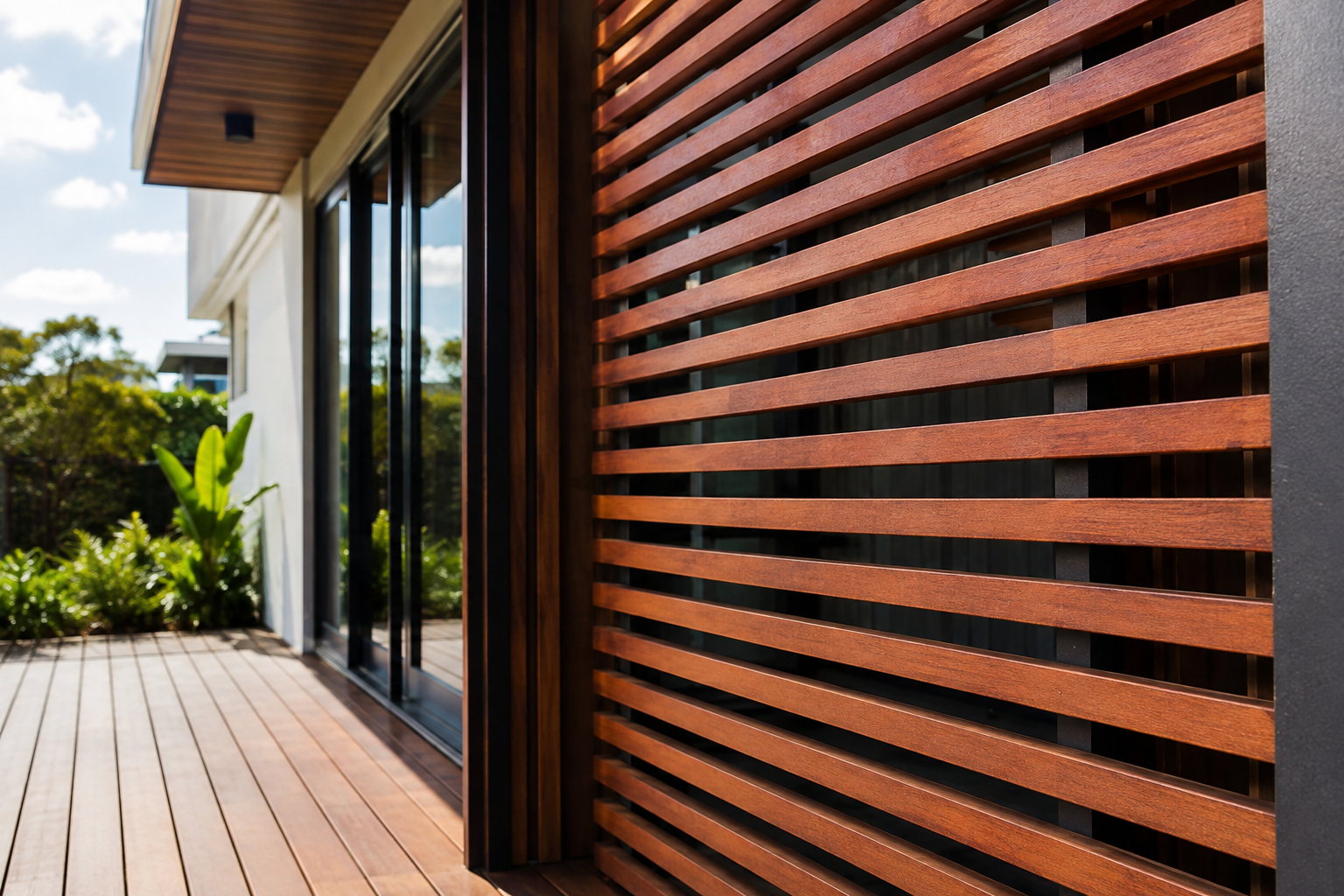
merbau screening battens in Bendigo

Yes. Merbau is well suited to many above-ground outdoor applications in Australia because its heartwood has high natural durability.

WoodSolutions identifies Merbau, also known as Kwila, as having Class 1 natural durability for above-ground use and Class 3 for in-ground contact. This distinction matters because timber exposed above ground experiences a different decay hazard from timber placed directly into soil.

Merbau’s natural durability makes it suitable for applications such as:

  • Privacy screens and architectural screening
  • Outdoor feature walls
  • Fences and gates
  • Exterior decorative battens
  • Pergola and outdoor living applications
  • Some external wall and ceiling lining applications, where the specific product and construction system are appropriate

Durability does not mean maintenance-free. A well-designed installation still needs to allow water to drain and timber to dry.

How does Merbau perform in sun, rain and changing weather?

Merbau generally performs well when used above ground and exposed to normal Australian weather conditions. Its natural durability helps it resist decay, while its relatively stable characteristics make it suitable for external applications. WoodSolutions reports low unit shrinkage values for Merbau, although timber will still respond to changes in moisture content.

Outdoor conditions can still change its appearance.

Unfinished Merbau will gradually weather from its original reddish-brown colour towards a more subdued grey or silver-grey appearance as it is exposed to sunlight and weather. This is a normal weathering process rather than necessarily a sign that the timber is failing.

If retaining the original colour is important, an appropriate exterior timber finish can help slow visual weathering. The finish should be selected specifically for external timber and applied according to the manufacturer’s instructions.

What about rain and moisture?

Rain itself is not necessarily the main problem. Persistent moisture retention is.

Merbau battens should be detailed so water does not remain trapped around joints, fixings or concealed surfaces. Good ventilation and drainage help timber dry between wet periods, reducing the conditions that encourage fungal decay.

This is particularly relevant to merbau batten screens, where closely spaced battens can create areas that are difficult to inspect and maintain.

Does Merbau have any outdoor drawbacks?

Merbau is durable, but it has characteristics that need to be considered before installation.

One of the most important is tannin or extractive bleed. Merbau contains water-soluble extractives that can leach from the timber, particularly when newly installed and exposed to rain. These can stain adjacent concrete, masonry, render or other light-coloured surfaces. WoodSolutions specifically recommends sealing all sides of Merbau used in applications where staining of surrounding work could be an issue.

This means installers should think about the surrounding materials, not just the timber.

For example, if a Merbau screen is installed directly above a pale concrete path, water running through the screen can carry extractives onto the surface below. Planning drainage and allowing for initial leaching can substantially reduce the risk of unwanted staining.

What should you consider when choosing Merbau screening battens?

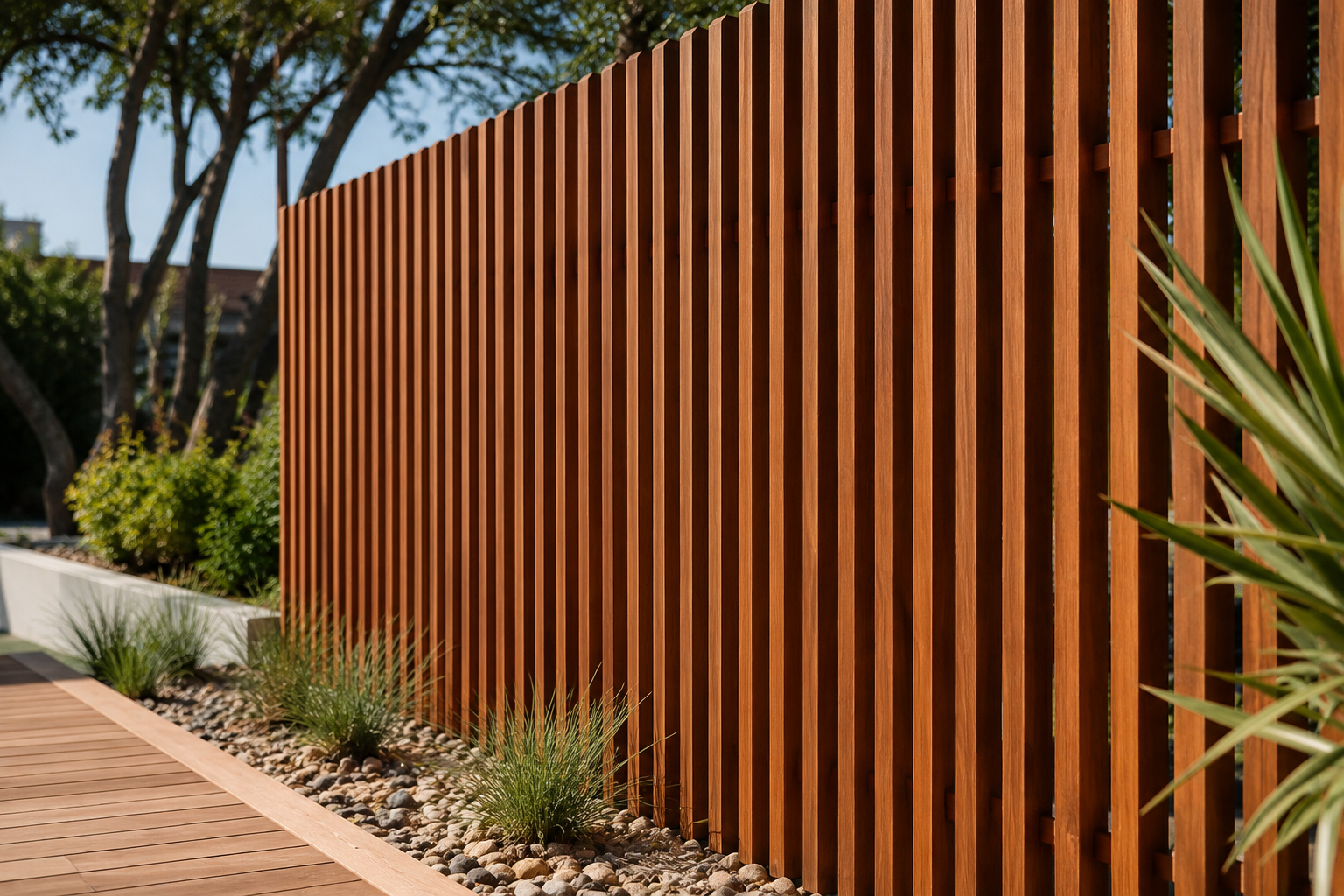
Merbau outdoor battens in Bendigo

The timber species is only one part of the specification. Before purchasing merbau outdoor battens, consider the following:

Consideration

Why it matters

Heartwood content

Natural durability classifications apply to heartwood, not automatically to sapwood.

Batten dimensions

Size influences appearance, fixing requirements and movement.

Exposure

Full sun, wind and driving rain create greater weathering demands than sheltered locations.

Ventilation

Adequate airflow helps timber dry after wet weather.

Fixings

Dense hardwood can require appropriate pre-drilling and corrosion-resistant fixings.

Finish

A suitable exterior finish can help manage colour change and weathering.

Drainage

Water should not become trapped around the battens or supporting structure.

Fire requirements

Bushfire-prone sites require the relevant BAL and construction requirements to be checked.

WoodSolutions notes that Merbau can tend to split unless pre-bored and that its density can affect machining and fixing. Appropriate installation practices therefore matter when working with this hardwood.

Are Merbau battens suitable for privacy screens and exterior walls?

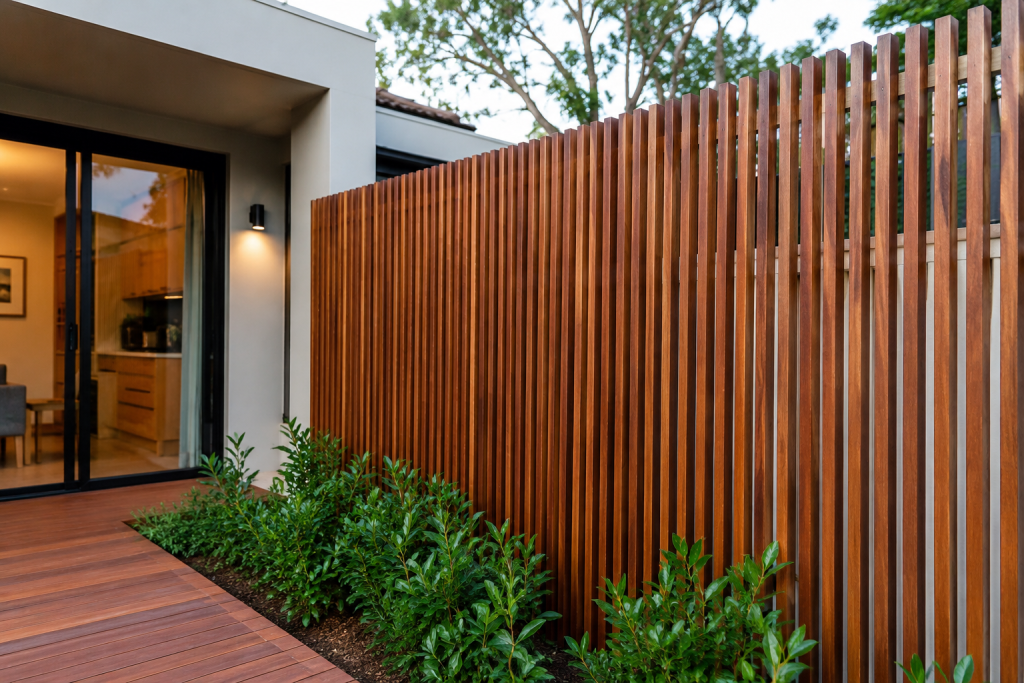
Merbau battens for privacy screens in Bendigo

They can be, provided the particular batten product, dimensions and fixing system are suitable for the application.

Merbau battens for privacy screens are particularly useful where the design needs both visual screening and airflow. The spacing between battens can be adjusted to influence privacy, light penetration and the overall appearance of the screen.

For merbau timber battens for exterior walls, the supporting structure and installation method become especially important. Battens should not be treated as a substitute for a compliant wall system. The wall behind them still needs to provide the required weatherproofing, drainage and structural performance.

The same principle applies to architectural screening. A visually attractive batten system still needs appropriate structural support and fixing details for its location.

How should Merbau battens be installed outdoors?

A sound installation starts with detailing rather than finishing.

  1. Confirm the application and exposure. Determine whether the battens are fully exposed, partially sheltered or exposed to persistent moisture.
  2. Select suitable heartwood timber. Natural durability ratings relate to heartwood, so the specification should account for the proportion and quality of sapwood.
  3. Provide adequate drainage and ventilation. Avoid details that trap water against the timber.
  4. Use suitable fixings. Dense hardwood should be pre-drilled where required, and fasteners should be appropriate for the outdoor environment.
  5. Allow for timber movement. Outdoor timber responds to changes in moisture, so installation needs to accommodate normal dimensional movement.
  6. Manage tannin bleed. Protect vulnerable adjacent surfaces and consider appropriate pre-treatment or sealing where staining could cause problems.
  7. Apply the selected finish correctly. Follow the coating manufacturer’s preparation, application and re-coating requirements.

These details are often more important to long-term performance than simply choosing a species with a high durability classification

How do you maintain Merbau timber battens?

Maintenance requirements depend on exposure and the finish selected.

For unfinished Merbau, periodic inspection is useful for identifying surface weathering, cracking, loose fixings, dirt accumulation and areas where water may be retained.

For finished timber, inspect the coating rather than relying on a fixed calendar. When the finish begins to deteriorate, clean and prepare the timber before re-coating according to the coating manufacturer’s instructions.

A simple maintenance checklist includes:

  • Keep battens reasonably clean and free from accumulated debris.
  • Check fixing points and connections periodically.
  • Look for areas where water remains trapped.
  • Inspect for excessive surface checking or deterioration.
  • Maintain exterior coatings where colour retention is required.
  • Address drainage problems rather than attempting to solve them with additional coating.

What about Merbau battens in bushfire-prone areas?

Bushfire requirements must be assessed separately from ordinary outdoor durability.

WoodSolutions identifies Merbau as a bushfire-resisting timber listed under AS 3959, but whether a particular batten installation is compliant depends on the BAL, application, dimensions, construction system and other project requirements.

Do not assume that using Merbau automatically makes a screen, wall or deck compliant with a particular BAL. For a bushfire-prone project, confirm the requirements with the relevant building professional, certifier or bushfire consultant before specifying the material.

What are the main benefits and limitations of Merbau battens?

Benefits

  • High natural durability for above-ground outdoor applications
  • Strong performance in exposed environments when correctly detailed
  • Distinctive reddish-brown hardwood appearance
  • Suitable for privacy screens and architectural applications
  • Can be finished to retain more of its original colour
  • Widely recognised in Australian exterior timber applications

Limitations

  • Natural colour will weather without suitable finishing
  • Tannin bleed can stain adjacent surfaces
  • Dense timber requires appropriate cutting and fixing techniques
  • Durability ratings do not mean the timber can be placed in any exposure without suitable detailing
  • Natural durability classifications apply to heartwood, not sapwood

Conclusion

Merbau battens can perform very well in Australian outdoor conditions, particularly in above-ground applications where the timber is properly selected, fixed, ventilated and protected from persistent moisture. Its Class 1 above-ground natural durability is a major reason Merbau remains a practical choice for outdoor screening and architectural timber applications.

The important distinction is that durable timber is not the same as maintenance-free timber. Good drainage, ventilation, suitable fixings, careful detailing and an appropriate finishing strategy all contribute to long-term performance. For more ideas on selecting timber for contemporary exterior projects, explore our guide to 2026 exterior cladding trends.

If you are planning a privacy screen, architectural feature or other outdoor timber project, Bendigo Building and Timber Supplies can help you assess the Merbau batten options suitable for your application and project requirements.

Frequently Asked Questions

Ans:-Yes. Merbau heartwood has Class 1 natural durability for above-ground use under Australian timber durability classifications, making it suitable for many exposed outdoor applications when correctly detailed and installed.

Ans:-Not necessarily. Unfinished Merbau can weather naturally, while an appropriate exterior timber coating can be used when maintaining its colour and appearance is a priority. The coating manufacturer’s preparation and maintenance requirements should be followed.

Ans:-Yes. Merbau is commonly used for outdoor screening because its natural durability and appearance suit above-ground architectural applications. Screen spacing, support, ventilation and fixing details should be designed for the specific installation.

Ans:- Merbau contains water-soluble extractives that can leach from the timber when exposed to water. The resulting staining can affect adjacent concrete, masonry and other porous surfaces, particularly with new timber. Appropriate detailing and sealing can help manage the issue.

Ans:- There is no single service-life figure that applies to every installation. Merbau is classified as Class 1 for above-ground natural durability, but actual performance depends on exposure, design, timber quality, moisture management, installation and maintenance. Durability classifications should therefore be treated as a guide rather than a guarantee of service life.

Have any Question? Ask an Expert

Due to the ongoing oil crisis, there has been an increase in the delivery charges and prices.